01
Live
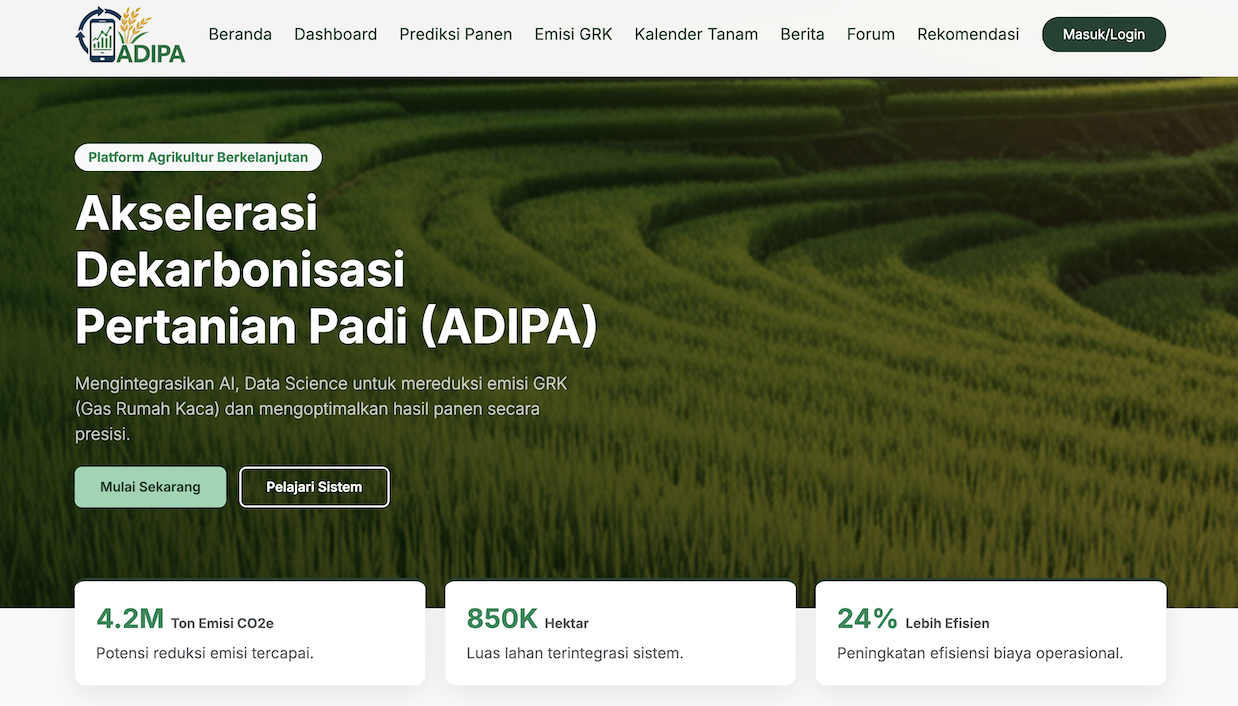
Climate-tech Agriculture Platform
Bridging the gap between high-performance software engineering and artificial intelligence. I build intelligent applications and robust architectures.
I am an engineer deeply passionate about the intersection of Software Engineering and Artificial Intelligence. My work focuses on building robust systems that leverage machine learning to solve real-world problems.
My expertise spans across training deep learning models, software reverse engineering, and integrating Large Language Models (LLM) via platforms like OpenRouter API. I have hands-on experience with high-performance computing, including NVIDIA DGX-A100, and deploying architectures on Google Cloud Platform.
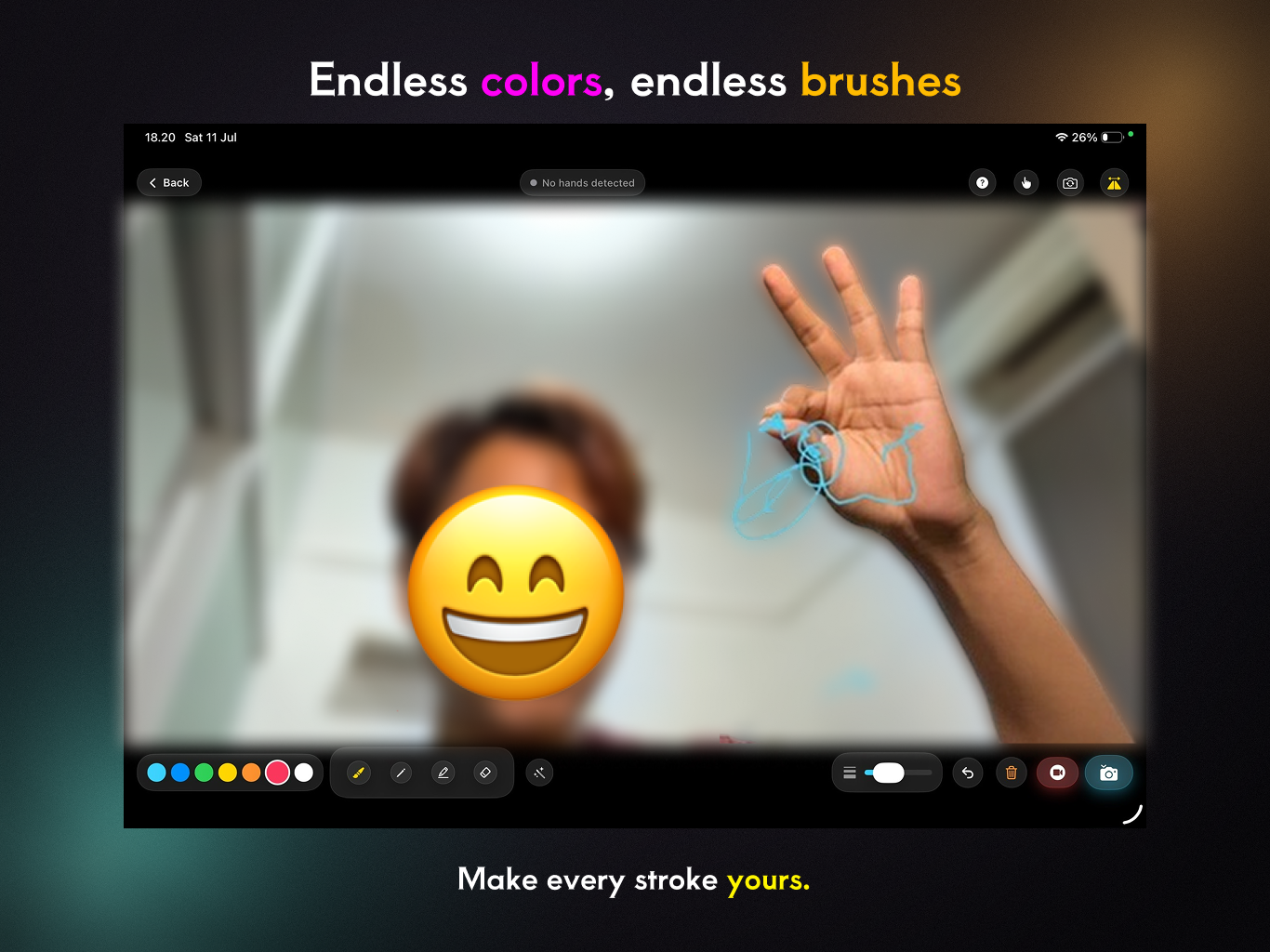
Currently, I'm diving deep into the Apple ecosystem as an iOS Developer, crafting native applications with Swift and exploring the boundaries of edge AI.
Developing native iOS applications using Swift and SwiftUI. Focusing on user-centric design, accessibility, and integrating advanced device capabilities.
Collaborated on building intelligent agent assistants, tuning prompts, and optimizing LLM interactions for automated workflows.
Curated, annotated, and managed high-quality datasets to train robust machine learning models across various domains.
International Journal of Intelligent Engineering & Systems
The need for digital mental health services is increasing due to the limited number of medical professionals globally. Although transformer-based language models have demonstrated strong performance in counseling-related text classification, existing approaches largely focus on accuracy without addressing scalability and real-time deployment constraints in resource-limited environments. This research addresses this gap by proposing a model to automated counseling conversation topic classification system designed to work in real time. Through fine-tuning and knowledge distillation techniques, we present a model that intelligent in recognizing complex psychological terminology and also efficient to implement on devices with limited resources. The results show that BERT and MentalBERT (teacher model) achieved 0.9154 ± 0.0135 and 0.9215 ± 0.0135 F1-score. Meanwhile, distilled model maintained its performance with 0.9115 ± 0.0139 (MentalBERT) and 0.9087 ± 0.0125(BERT) F1-score, with 39.4% parameters reduction and almost 1.5 times better acceleration in inference latency compared to teacher model. This research also revealed semantic overlap between depression and self-esteem, as well as between relationships, intimacy, and relationship-dissolution. These findings suggest that integration of fine-tuning and knowledge distillation has potential to expand the implementation of responsive, scalable, and accessible AI-based mental health services.
IEEE Access
The Android operating system continues to face escalating security challenges, primarily due to its open-source nature and the rapid proliferation of applications from untrusted sources. Traditional static analysis tools lack the flexibility to capture evolving malware behaviors, limiting their interpretability and scalability. Large Language Models (LLMs) are now applied in cybersecurity for malware detection, phishing classification, and cyber threat intelligence. However, their use has not been extended to producing detailed and interpretable Android malware analysis reports. This study integrates LLMs into Android malware analysis by creating a dataset for instruction tuning and fine-tuning the Qwen-7B model using the LoRA method. The model MalQwen is developed by fine-tuning Qwen 2.5-7B with 429 malware samples containing decompiled code and expert labeled security reports. MalQwen outperforms models like Gemini and LLaMA, achieving a BERTscore of 0.84 for SMS malware and a Perplexity score of 3.30 for Scareware. These findings confirm MalQwen’s superior performance in generating precise malware reports, validating LLMs as a powerful new method for Android malware analysis.
2025 International Conference on Smart Computing, IoT and Machine Learning (SIML)
This study aims to improve healthcare fraud detection in BPJS Kesehatan's claims verification, where mismatches between billed amounts and INACBGs rates often cause underpayment and financial strain on providers. A key challenge is class imbalance in fraud datasets, limiting conventional detection methods. While prior work used oversampling like SMOTE and ROS–which often generate noisy samples–this study introduces a cluster-based oversampling framework preserving claims data distribution. It combines six cluster-guided techniques (AgglomerativeROS, AgglomerativeSMOTE, DBSCANROS, DBSCANSMOTE, KMeansROS, KMeansSMOTE) with ensemble learning (Decision Tree, Random Forest, Balanced Random Forest, Gradient Boosting, CatBoost). The CatBoost model with KMeansROS achieved strong results (AUC-PRC: 0.93924, precision: 0.85714, recall: 0.92308), improving recall by 19.3%, benefiting fraud detection and financing sustainability.
Sewagati
Terjadinya konflik teritorial pada kawasan Laut Natuna Utara (LNU), melatar belakangi program pengabdian masyarakat ini untuk memodelkan kekuatan dan ancaman yang dihadapi Indonesia di area LNU. Untuk itu, pada program ini melibatkan mitra dari Tentara Negara Indonesia Angkatan Laut (TNI-AL) untuk bersama-bersama membuat model sistem dinamik yang tujuannya untuk memprediksi tiga variabel utama, yaitu pertahanan dan keamanan Laut Natuna Utara, infrastruktur pertahanan dan keamanan Indonesia, serta penggunaan sumber daya laut yang tujuannya untuk meningkatkan nilai ekonomi dan keamanan. Dalam pembuatan model ini dengan mengambil data 5 tahun ke belakang dan memproyeksikannya selama 6 tahun ke depan. Dari data-data tersebut, dicari variabel-variabel yang saling mempengaruhi dan pengaruh sebab-akibatnya oleh seluruh tim program pengabdian masyarakat ini yang juga telah melibatkan pengetahuan dari mitra. Program pengabdian kepada masyarakat ini menghasilkan Causal Loop Diagram (CLD) yang menggambarkan variabel-variabel yang saling mempengaruhi pertahanan dan keamanan Indonesia pada kawasan LNU yang sangat berfungsi sebagai dasar pengambilan keputusan untuk meningkatkan keamanan dan nilai ekonomi Indonesia.
Climate-tech Agriculture Platform

Sustainable Supply-chain Platform
Native iOS
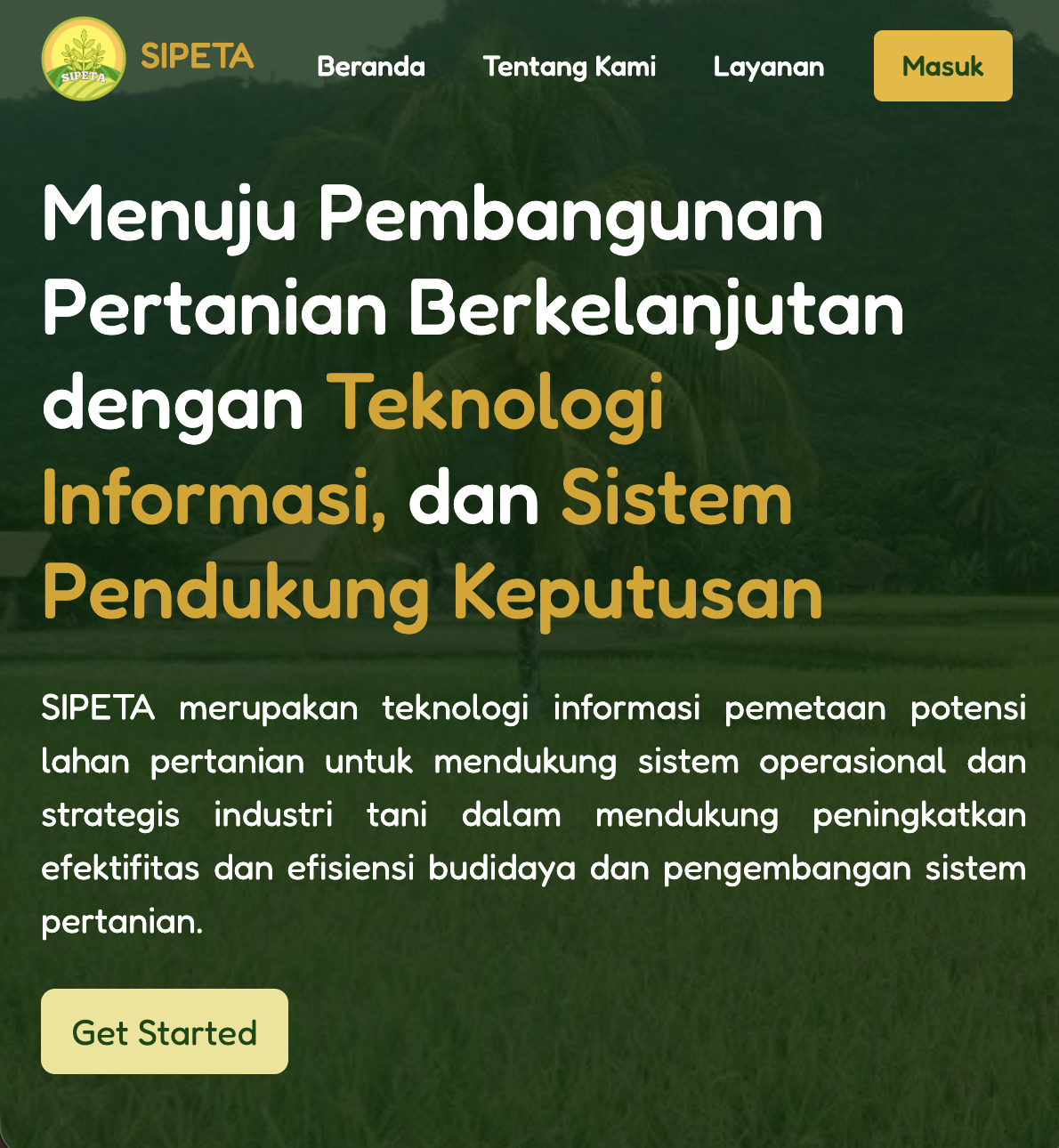
Geospatial Web Platform

Predictive Agriculture Platform
I'm always open to discussing new projects, creative ideas, or opportunities to be part of your visions.
© 2026 Tegar Ganang Satrio Priambodo. All rights reserved.